
WELCOME BONUS 300%
UP TO €2000 + 100
FREE SPINS
UP TO €2000 + 100
FREE SPINS
Home → Games
Casino games at Rocknrolla
Video Poker 9/6: What the Two Numbers Mean
The Full Pay Deuces Wild table offers an RTP of 100.76%, which means the house edge is negative at -0.76%. This specific paytable structure allows for a theoretical positive expected value when players use flawless optimal strategy and bet the maximum amount allowed per hand. The payout schedule includes Natural Royals paying 800 coins and Four Deuces returning 200 coins, ensuring high returns on premium hands. Any deviation from this perfect strategy immediately drops the RTP below 100%, turning the mathematical advantage back to the casino.
In contrast, the Not So Ugly Ducks variant features a lower RTP of 99.73% with a house edge of 0.27%. This common version reduces payouts for Five of a Kind to 16 and Straight Flushes to 10, altering the game's volatility significantly compared to the full pay version. The Illinois Deuces table shows an even lower RTP of 98.91%, demonstrating how minor paytable changes impact long-term returns. Players must verify the exact coin values for each hand rank before sitting down to ensure they are playing the most favorable mathematics available.
Understanding these distinctions is crucial because the difference between a 9/6 and a lesser paytable can cost players significant bankroll over time. The Full Pay version requires precise decision-making to maintain its unique status as the only mass-market game with an RTP exceeding 100%. Conversely, the NSUD version demands strict adherence to its specific strategy chart to minimize losses effectively. Always check the help menu for the complete paytable to avoid falling into games with inferior return percentages.
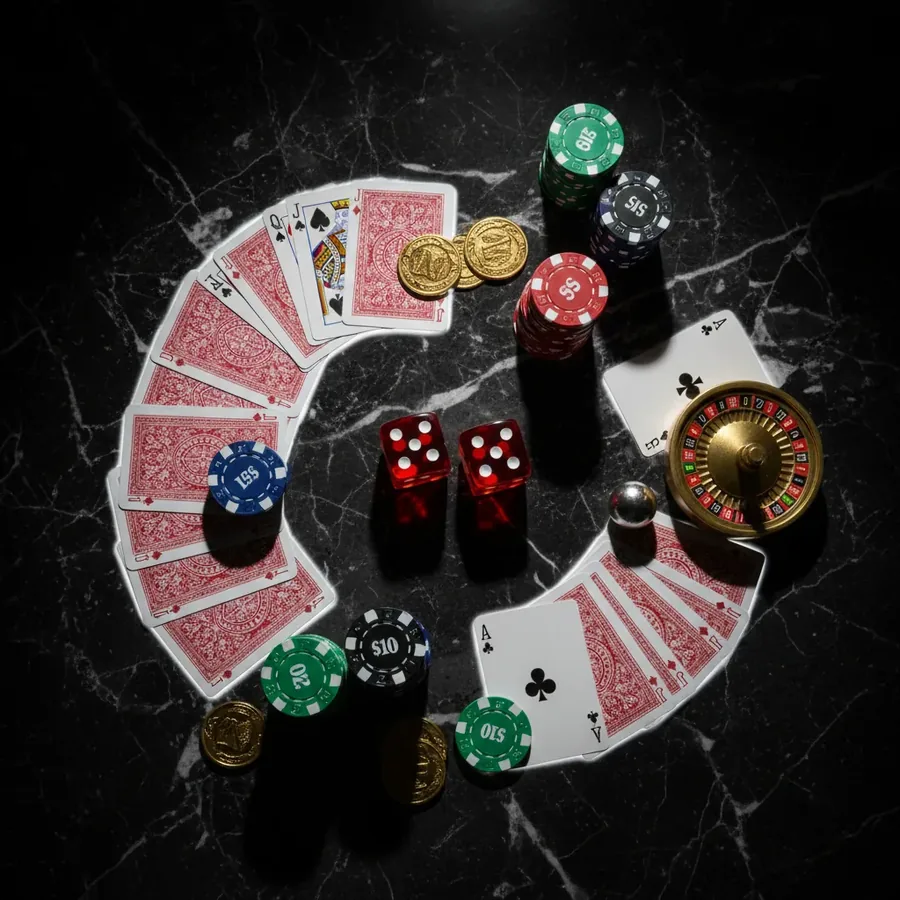
Why the Double Zero Almost Doubles the House Edge
American Roulette features a wheel with 38 pockets, including both a single zero and a double zero, which fundamentally alters the house edge calculations. The standard straight-up bet pays 35:1, but the presence of the extra zero pocket increases the house advantage to 5.26% compared to European variants. This additional sector effectively doubles the house edge found on wheels with only 37 pockets, making every wager statistically less favorable for the player. The payout structure remains identical, yet the probability of winning decreases due to the expanded number of possible outcomes on the wheel.
The Five Number Bet in American Roulette represents a particularly dangerous trap, carrying a house edge of 7.89% and an RTP of 92.11%. This wager covers five sectors (0, 00, 1, 2, 3) and pays 6:1, resulting in a significantly higher cost than any other bet on the table. No equivalent exists on European wheels, making this side bet unique to the American format and universally advised against by mathematical analysts. It stands as the worst-value proposition available, costing players nearly twice as much as standard outside bets over the long run.
Comparing this to European Roulette highlights the severe financial impact of the double zero configuration on overall gameplay expectations. While straight bets still pay 35:1, the absence of the double zero in European versions halves the house edge to approximately 2.70%. This structural difference means players retain more of their bankroll in single-zero environments compared to those forced to play American rules. Avoiding the Five Number Bet entirely is essential for minimizing losses in any casino environment that offers both wheel types.
Roulette Wheel with 37 vs 38 Pockets
European Roulette wheels contain exactly 37 pockets, ranging from numbers one through thirty-six plus a single green zero sector. This configuration results in a house edge of 2.70% for standard bets like Red/Black or Odd/Even, which pay 1:1. The reduced number of pockets compared to American wheels directly translates to better odds for players attempting to predict ball landing positions. Every spin maintains these fixed probabilities, ensuring that the theoretical return remains consistent across all standard waging options offered at the table.
American Roulette expands this layout to 38 pockets by adding a second green zero sector, known as the double zero. This addition increases the house edge to 5.26% for identical bets, effectively doubling the casino's average take from each dollar wagered. The payout ratios remain unchanged at 35:1 for straight bets, but the increased probability of loss makes long-term profitability nearly impossible. Players choosing this variant accept a significantly steeper mathematical disadvantage compared to those playing at European-style tables.
The distinction between these two wheel types dictates the fundamental strategy for managing bankroll longevity during roulette sessions. Choosing the 37-pocket wheel preserves capital more effectively than the 38-pocket alternative, where the extra zero erodes winnings faster. Side bets like columns and dozens pay 2:1 in both versions, but the underlying house edge determines how quickly those payouts are consumed. Smart players always seek out single-zero wheels to maximize their expected return and extend their playing time significantly.
Columns and Dozens Pay 2:1 in Roulette
Roulette offers external betting options such as columns and dozens, which cover twelve numbers each and pay out at 2:1 odds. These bets provide a higher frequency of wins compared to single-number straight bets, though the payout ratio reflects the increased probability of success. In American Roulette, the house edge for these wagers remains at 5.26% due to the presence of the double zero pocket. Players placing chips on these sections aim to balance risk and reward through more frequent, smaller victories over extended playing sessions.
Street bets covering three adjacent numbers pay 11:1, offering a middle ground between low-risk external bets and high-risk single-number plays. Corner bets spanning four numbers pay 8:1, while six-line bets covering two rows pay 5:1 for broader coverage. Each of these internal wagers carries the same 5.26% house edge in American formats, maintaining consistency across the entire betting grid. Understanding these payout structures helps players construct diversified betting strategies that manage variance without altering the fundamental mathematical disadvantage.
Combining multiple external bets can create complex patterns that cover large portions of the wheel while limiting exposure to the house edge. A combination of dozens and columns might secure frequent small wins, offsetting occasional losses on larger single-number attempts. However, the cumulative effect of the 5.26% edge ensures that the casino retains a percentage of every wager placed regardless of the strategy employed. Analyzing these payout ratios reveals why no betting system can overcome the inherent statistical advantage held by the house over time.
Double Down: Doubling Your Bet After Two Cards
Blackjack liberal Vegas Strip rules allow players to double their initial wager after receiving two cards, provided they accept the dealer's next card only. This option significantly impacts the house edge, with rules like Double After Split reducing the advantage by 0.14 percentage points. The ability to increase exposure during favorable counts transforms standard hands into high-variance opportunities that can drastically alter session outcomes. Players must weigh the potential for doubled profits against the risk of losing twice the original stake on a single hand.
Resplitting Aces further enhances player flexibility by allowing up to four separate hands when dealt paired aces, improving the RTP by 0.08 percentage points. This rule change encourages aggressive play in situations where traditional blackjack would limit strategic options. Combined with late surrender and soft 17 dealer rules, these modifications create the most favorable conditions for skilled players seeking to minimize losses. The standard deviation of 1.15 indicates moderate volatility, balancing risk and reward for those employing optimal basic strategy consistently.
Dealer hitting soft 17 increases the house edge by 0.22 percentage points, highlighting how subtle rule variations affect long-term profitability. Six-deck games offer a slight improvement of 0.02 percentage points compared to eight-deck versions, favoring players who prefer faster-paced action. Understanding these mechanical differences allows gamblers to select tables that align with their risk tolerance and bankroll management goals. Always verify the specific doubling and splitting rules before sitting down to ensure you are playing under the most advantageous conditions available.
Game categories at a glance
| Category | Examples | Stakes From | Highlight |
|---|---|---|---|
| Slots | Dead or Alive 2, Buffalo Power: Hold and Win, Diamond Mine Megaways | 0,10 EUR | thousands of titles |
| Table games | Roulette, Blackjack, Baccarat | 0,50 EUR | classic rules |
| Live casino | Auto Roulette Classic 1 Live, Ultimate Roulette | 0,20 EUR | real dealers |
| Jackpot games | Mega Moolah, Divine Fortune, Age of the Gods | 0,20 EUR | progressive pools |
| Instant games | Aviator, Plinko, Mines | 0,10 EUR | fast rounds |
| Video poker | Jacks or Better, Deuces Wild | 0,25 EUR | strategy based |
Three Roulette Variants, Three House Edges Compared
American Roulette features a double-zero wheel with 38 sectors, resulting in a house edge of 5.26% and an RTP of 94.74%. This additional sector effectively doubles the casino's advantage compared to European variants. Consequently, the player faces significantly higher long-term losses on every straight bet placed at this table.
The Five Number Bet covers sectors 0, 00, 1, 2, and 3 but carries a steep house edge of 7.89% and an RTP of only 92.11%. This specific wager is the most unfavorable option on the American wheel, offering payouts of 6:1 despite the poor odds. Players should avoid this trap as it offers no equivalent protection found in other standard bets.
European Roulette typically maintains a lower house edge of 2.70%, which stands in sharp contrast to the 5.26% found in the American version. The single zero pocket reduces the mathematical disadvantage for the gambler considerably. Choosing the single-zero variant preserves more capital over extended playing sessions.
Bankroll for 200 Rounds at 1 EUR
Playing Craps Pass Line bets with a 1 EUR stake involves a house edge of 1.41% and an RTP of 98.59%. Over 200 rounds, the expected loss calculates to approximately 2.82 EUR based on the initial bankroll. This statistical outcome highlights the relatively low cost of entertainment for this specific game choice.
Baccarat Player bets operate with an 8-deck shoe and a house edge of 1.24%, yielding an RTP of 98.76%. A 1 EUR wager across 200 rounds projects an expected loss of roughly 2.48 EUR. This metric demonstrates that Player bets are slightly more expensive than Banker bets due to the absence of commission.
Single-deck Blackjack with classic rules and 3:2 payouts offers an exceptional RTP of 99.85% and a minimal house edge of 0.15%. Betting 1 EUR per hand for 200 rounds results in a projected loss of just 0.30 EUR. This efficiency makes it one of the most mathematically favorable options for conserving funds.
How Much Does One Mistake Cost in 100 Hands?
Switching from 3:2 to 6:5 blackjack payouts increases the house edge by exactly 1.39 percentage points, raising the total edge to 1.85%. On a 1 EUR bet, this error costs an additional 1.39 EUR per hand over the long run. Playing 100 hands under these inferior rules would result in an extra loss of 139.00 EUR compared to fair tables.
Choosing Baccarat Player Pair side bets introduces a severe house edge of 10.36% against an RTP of 89.64%. This side wager carries a risk magnitude far exceeding the main game, where the base edge is merely 1.24%. Deviating from optimal strategy here rapidly depletes the bankroll through high-variance losses.
Opting for Specific Double Sic Bo bets incurs a maximum house edge of 18.52% with an RTP of 81.48%. This represents the worst-performing category within the dice game selection available. Incorrectly targeting these outcomes during 100 hands generates substantial theoretical losses far beyond standard table games.
Before Double Down: read the open dealer card
Blackjack Liberal Vegas Strip rules allow doubling after splitting, which improves the RTP by 0.14 percentage points relative to restrictive variants. This rule modification enhances player flexibility when the dealer shows a weak upcard. Utilizing this feature correctly can reduce the overall house edge to 0.28%.
Dealer hitting soft 17 adds 0.22 percentage points to the house edge, negatively impacting the player's expected return. Avoiding tables with this rule preserves the theoretical RTP closer to optimal levels. Strategic players must verify this parameter before committing their bankroll to a specific game.
Resplitting Aces provides a modest 0.08 percentage point improvement to the house edge by allowing additional hand creation. This option becomes critical when starting with strong pairs against dealer vulnerabilities. Recognizing these rule variations directly influences the profitability of doubling strategies.
Connection Lost in Table Game: Round Continues Automatically
RNG technology ensures that all game outcomes remain independent and unpredictable regardless of external connectivity issues. The server processes each hand or spin according to predefined mathematical models without player intervention. Disconnections do not alter the underlying probability structure of the active round.
Craps Free Odds bets carry a zero house edge, meaning they pay out at true odds once the point is established. These wagers only apply after a pass line decision, remaining unaffected by temporary network interruptions. The mathematical fairness of these specific bets remains intact throughout the session.
Video Poker Deuces Wild Full Pay tables offer an RTP of 100.76% with perfect play, turning the house edge negative at -0.76%. Such positive expectation requires flawless strategy execution across all potential hand combinations. Any deviation from the optimal chart immediately shifts the advantage back to the casino.
Sic Bo Pays from 1:1 to 180:1
Specific Triple bets in Sic Bo offer a payout of 180:1, representing the highest return among all special wares available in this dice game category. This steep multiplier compensates for the significantly elevated house edge of 16.20 percent that applies to these precise three-of-a-kind outcomes. Players risking funds on this outcome face an RTP of only 83.80 percent over the long run, which is substantially lower than single number bets.
Single Number wagers provide a much safer alternative with payouts ranging from 1:1 to 3:1 depending on matching dice count, while maintaining the lowest house edge of 7.87 percent. This specific side bet yields an RTP of 92.13 percent, making it one of the more statistically favorable options compared to other high-risk dice positions. The variance remains manageable here, unlike the volatile triple combinations that drain bankrolls faster due to their infrequent hit rates.
Any Triple outcomes pay 30:1 but carry a house edge of 13.89 percent, resulting in an RTP of 86.11 percent that sits between the extremes of singles and specific triples. Specific Double bets are the worst performing option with an RTP of 81.48 percent and a massive house edge of 18.52 percent despite paying 10:1. These figures demonstrate how table game mathematics vary wildly within a single title, requiring strict bankroll management to survive the higher volatility segments.
Keno and Bingo with RTP Between 92 and 95
American Roulette Straight bets pay 35:1 instead of the theoretical 36:1 odds, creating a house edge of 5.26 percent across all thirty-eight sectors on the wheel. This specific payout structure defines the base RTP of 94.74 percent for standard straight-up wagers, which serves as a benchmark for comparing other casino table games. The double zero pocket fundamentally alters probability calculations, ensuring the casino retains a mathematical advantage on every single spin regardless of player strategy or betting patterns.
The Five Number Bet covering zero, double zero, one, two, and three pays 6:1 but carries a significantly worse house edge of 7.89 percent compared to other American roulette options. This specific trap wager results in an RTP of 92.11 percent, making it the least profitable choice for players seeking to minimize losses on the American wheel format. No equivalent bet exists on European wheels, highlighting how specific rule sets create unique vulnerabilities for unwary gamblers who do not study the payout tables carefully.
Baccarat Tie bets paying 8:1 represent the poorest value proposition with a house edge of 14.36 percent and an RTP of only 85.64 percent despite the attractive multiplier. This side wager drastically underperforms Player bets which maintain an RTP of 98.76 percent and a minimal house edge of 1.24 percent without commission fees. Comparing these figures reveals how easily casual players can lose value by accepting seemingly generous payouts that actually conceal severe mathematical disadvantages inherent in the game rules.
Craps Pass Line wagers offer an RTP of 98.59 percent with a house edge of 1.41 percent, providing one of the strongest statistical foundations for any table game strategy. This baseline performance contrasts sharply with Don't Pass bets which improve slightly to an RTP of 98.64 percent and a reduced house edge of 1.36 percent per roll. The difference stems from the twelve pushing the bet rather than losing, demonstrating how minor rule variations directly impact long-term profitability for disciplined players managing their session budgets.
Straight 35:1 Instead of 36:1: Where House Edge Originates
Video Poker Deuces Wild Full Pay tables deliver an exceptional RTP of 100.76 percent, giving players a positive expected value of minus zero point seventy-six percent against the house. This rare scenario occurs when utilizing optimal strategy on maximum bets, where natural royals pay eight hundred coins and four deuces award two hundred coins for substantial returns. Any deviation from perfect play immediately drops the RTP below one hundred percent, proving that discipline and knowledge are essential requirements for exploiting this advantageous mathematical situation.
Not So Ugly Ducks Video Poker offers a respectable RTP of ninety-nine point seven three percent with a house edge of zero point twenty-seven percent, falling short of full pay variants. Five of a Kind pays sixteen coins while straights flushes award ten, creating a different volatility profile compared to the more generous Illinois Deuces version at ninety-eight point nine one percent. Players must adjust expectations accordingly, as this popular variant provides steady entertainment value without the extreme risk associated with chasing near-perfect returns on complex video poker machines.
Craps Free Odds bets behind Pass Line wagers carry zero house edge and pay according to true odds, effectively neutralizing the initial disadvantage on the primary wager component. Combining three-four-five times odds reduces the overall house edge to just zero point thirty-seven percent, yielding a combined RTP of ninety-nine point six three percent for the total action. This structural advantage allows skilled players to minimize losses significantly, provided they understand that odds bets only apply after points are established and require additional bankroll allocation.
American Roulette: 5.26 Percent Due to Double Zero
Blackjack offering six-to-five payouts on naturals generates a house edge of 1.85 percent, which is dramatically higher than liberal Vegas Strip games paying three-to-two at zero point two eight percent. This rule change adds exactly one point three nine percentage points to the casino advantage, making sixty-deck games with poor payouts mathematically inferior to single-deck traditional formats. Players betting ten dollars receive only twelve dollars instead of fifteen, illustrating how subtle payout reductions erode expected returns far more aggressively than increasing deck counts alone would suggest.
Splitting pairs and doubling down after splits in Blackjack improves player odds by reducing the house edge by zero point zero eight and zero point fourteen percentage points respectively. Dealer hitting soft seventeen increases the house edge by zero point two two percentage points, demonstrating how specific procedural rules directly influence long-term profitability for strategic card counters. Six-deck games versus eight-deck variants shift the edge by approximately zero point zero two percentage points, showing that deck composition plays a minor but measurable role in overall game dynamics.
Casino bonuses contribute differently to wagering requirements, with table games counting only ten percent toward turnover while slots contribute fully at one hundred percent completion rates. This restriction forces players using welcome bonuses up to two thousand euros with three hundred percent matches to prioritize slot machines for efficient bonus clearing procedures. Understanding these contribution weights prevents wasted effort on low-contribution activities, ensuring that promotional funds convert into withdrawable cash efficiently without unnecessary exposure to unfavorable game mathematics.
Multihand Blackjack with Up to 5 Hands
Roulette American wheels feature thirty-eight sectors including double zeros, which doubles the house advantage compared to European single-zero formats despite identical payout structures for straight bets. The presence of both zero pockets ensures the casino maintains a five point two six percent edge on all outside bets like red black or odd even columns. This structural disadvantage persists regardless of betting systems employed, confirming that probability mathematics favor the house permanently unless players seek out superior alternatives elsewhere.
Baccarat Banker bets remain profitable despite commissions because their one point zero six percent house edge beats Player bets at one point twenty-four percent and Tie bets at fourteen point three six percent. Standard deviations vary significantly across these options, with Tie bets exhibiting two point six four volatility compared to Point bet variance of zero point nine five units per hand. Strategic players avoid Tie bets entirely, focusing instead on Banker wagers that offer the most consistent long-term preservation of bankroll capital across extended playing sessions.
Welcome bonuses up to two thousand euros with three hundred percent matches provide substantial starting capital, though free spins terms often restrict withdrawals until wagering requirements are satisfied completely. Players must navigate contribution percentages carefully, recognizing that table games slow progress significantly compared to high-contributing slot titles when attempting to clear promotional balances efficiently. Proper bankroll allocation during bonus periods minimizes risk while maximizing potential conversion rates, ensuring sustainable gameplay without excessive exposure to negative expectation scenarios inherent in most casino offerings.
Contact
Live - online chat
Banking









Providers












RockNRolla Casino 2026